American Diabetes Association Launches New Journal to Transform Diabetes, Obesity and Heart Health Care
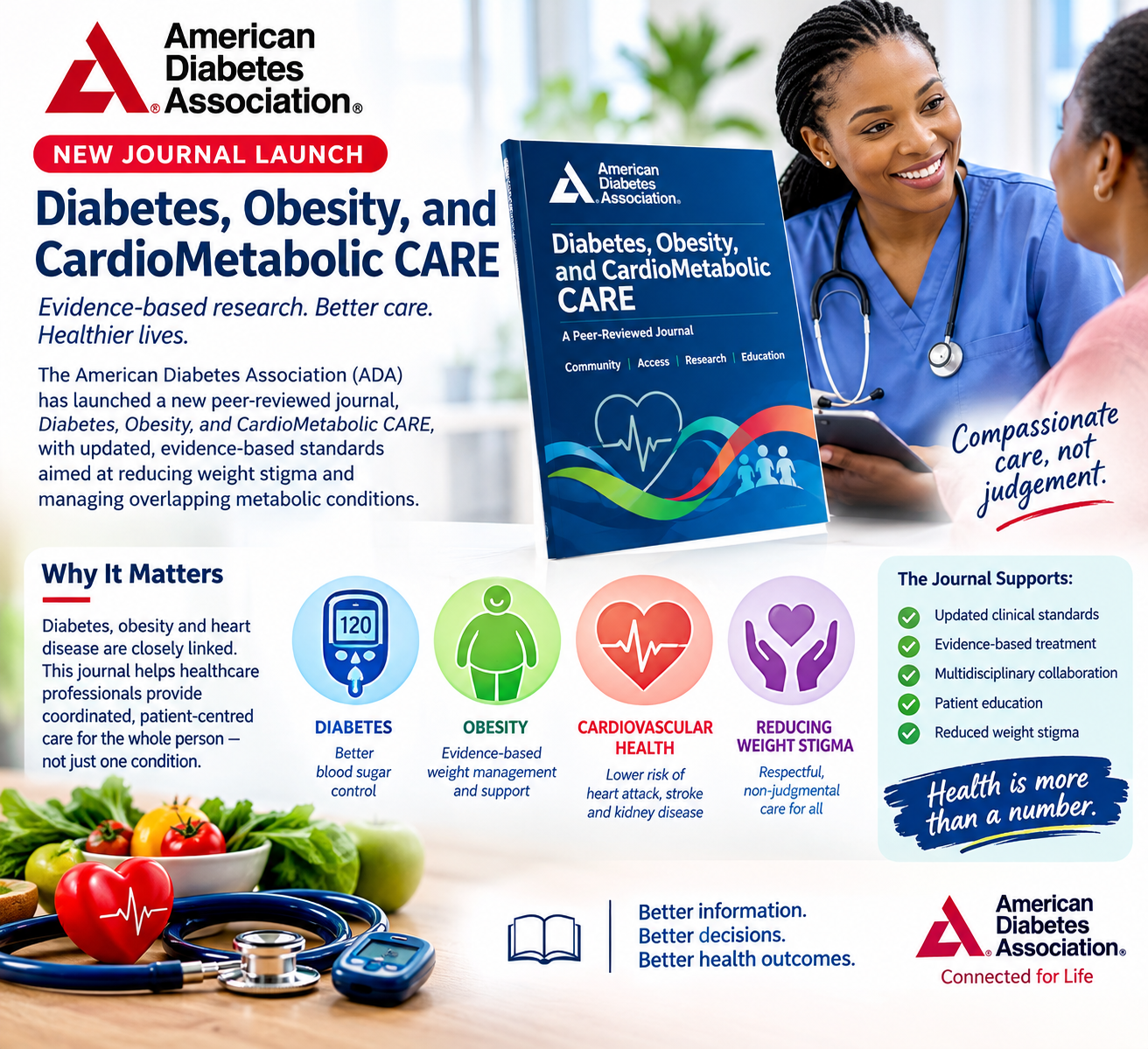
The American Diabetes Association (ADA) has launched a new peer-reviewed medical journal, Diabetes, Obesity, and CardioMetabolic CARE, to strengthen the prevention, diagnosis and treatment of diabetes, obesity and related metabolic diseases.
The journal published its inaugural issue in February 2026 and is designed to help healthcare professionals translate scientific research into practical, evidence-based patient care. It also provides a platform for clinical guidance that addresses the growing need for coordinated management of conditions that frequently occur together.
One of its important priorities is reducing weight stigma in healthcare while promoting respectful, individualised treatment for people living with obesity and related health conditions.
According to the ADA, the journal’s guiding principles Community, Access, Research and Education (CARE) reflect the importance of collaboration and accessible health information in improving patient outcomes.
Why a New Cardiometabolic Journal Matters
Diabetes, obesity and cardiovascular diseases are closely interconnected. Many patients experience more than one of these conditions, making their treatment more complex than managing a single diagnosis.
For instance, obesity can contribute to insulin resistance, a condition in which the body’s cells respond less effectively to insulin. This can increase the likelihood of developing type 2 diabetes. Diabetes, particularly when poorly controlled, can damage blood vessels and increase the risk of heart disease, stroke and kidney complications.
High blood pressure and abnormal cholesterol levels may further increase these risks.
The new journal aims to help healthcare professionals understand these overlapping conditions and develop treatment plans that consider the patient’s overall health rather than focusing on one medical problem in isolation.
Its intended readership includes physicians, nurses, pharmacists, diabetes educators, nutritionists, behavioural health professionals and other members of multidisciplinary healthcare teams.
Evidence-Based Standards for Obesity Care
Alongside the journal, the ADA’s Obesity Association has developed evidence-based Standards of Care in Overweight and Obesity to guide healthcare professionals in assessing and treating patients with overweight and obesity.
These standards address important areas such as screening, diagnosis, evaluation, staging and treatment. They also include guidance on pharmacological management and approaches to reducing weight stigma.
The recommendations are intended to support clinical decisions based on scientific evidence, individual medical needs and patient preferences.
The ADA’s 2026 diabetes standards also emphasise individualised weight-management strategies for people with type 2 diabetes and overweight or obesity. Depending on the patient’s circumstances, treatment may involve nutritional counselling, physical activity, behavioural support, medication or metabolic surgery.
No single treatment is appropriate for everyone. Decisions should account for medical history, potential benefits and risks, personal preferences and access to care.
Read the ADA’s 2026 Standards of Care in Overweight and Obesity.
Addressing Weight Stigma in Healthcare
One of the significant themes behind the initiative is the need to reduce weight-related discrimination and bias.
Weight stigma occurs when individuals are judged, stereotyped, embarrassed or treated unfairly because of their body size. Such experiences can occur in society and even within healthcare facilities.
When patients feel blamed or humiliated about their weight, they may become reluctant to discuss their health concerns, attend follow-up appointments or seek medical attention.
Weight is influenced by several factors, including genetics, biology, medications, psychological well-being, social circumstances and environmental conditions. It should therefore not be treated simply as a measure of personal discipline.
Healthcare professionals can help reduce stigma by:
A compassionate approach can help build trust between patients and healthcare providers and encourage people to participate more confidently in their care.


Comments