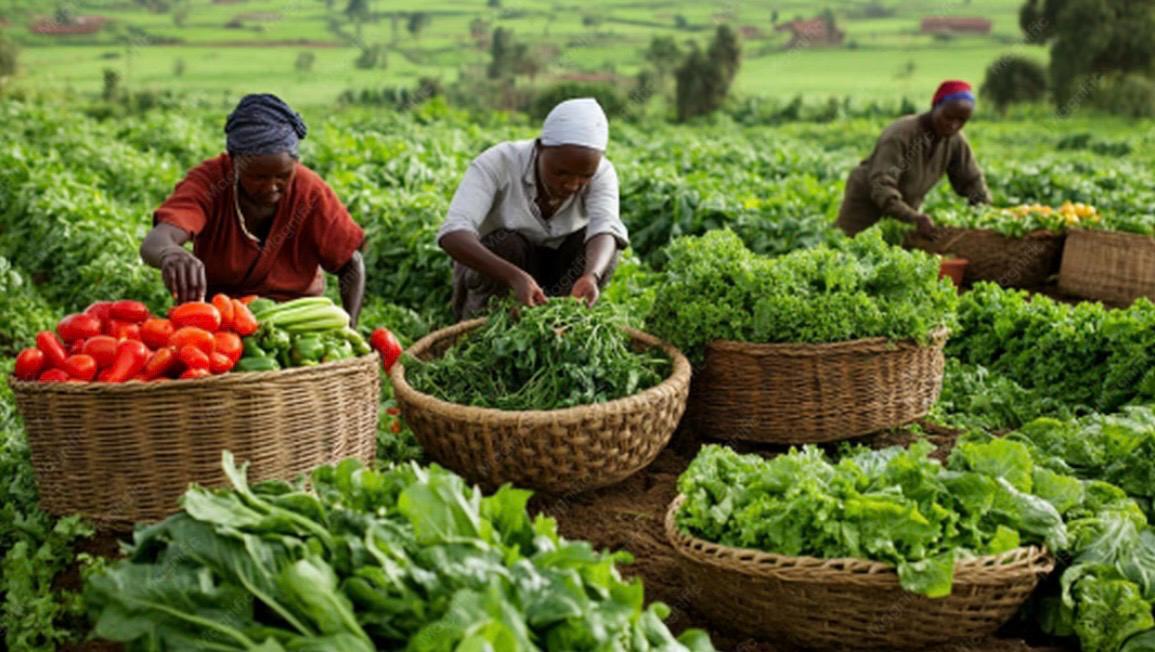
Nigeria is blessed with something many countries would struggle to acquire: vast agricultural land, a favorable climate, a large population, and a growing domestic market. Yet despite these advantages, agriculture and agro-industry remain among the country’s most underdeveloped economic opportunities.
Nigeria’s agricultural sector is often discussed in terms of farming, food production, and rural employment. But the bigger opportunity lies beyond the farm gate. The real untapped resource is agro-industrialization—the processing, packaging, storage, distribution, and commercialization of agricultural products.
From Farming to Agro-Industry
Nigeria produces enormous quantities of crops such as cassava, maize, rice, cocoa, oil palm, tomatoes, fruits, vegetables, and livestock products. However, too much of this production is sold in raw or minimally processed form.
This means Nigeria often captures only a fraction of the economic value of what it produces.
Consider cocoa. Exporting raw cocoa beans generates income, but processing those beans into cocoa powder, butter, chocolate, beverages, and other finished products can create significantly more value while generating jobs and supporting local businesses.
The same principle applies across the agricultural economy.
Instead of simply growing tomatoes, Nigeria can develop large-scale tomato processing industries. Instead of exporting raw cashew nuts, the country can process and package cashew products. Instead of selling cassava as a raw crop, businesses can turn it into starch, flour, ethanol, industrial inputs, and packaged food products.
The opportunity is not simply to produce more. It is to produce, process, and sell more value.
A Market Waiting to Be Served
With a population exceeding 200 million people, Nigeria has one of Africa’s largest consumer markets. That population represents enormous demand for food, beverages, animal feed, textiles, cosmetics, biofuels, and industrial raw materials.
A stronger agro-industrial sector could help Nigerian businesses meet more of this demand domestically instead of relying heavily on imports.
It could also position Nigeria as a major supplier to neighboring African markets and the wider global economy.
The African Continental Free Trade Area provides an additional reason to think beyond Nigeria’s borders. A competitive agro-processing industry could allow Nigerian companies to build regional brands and supply chains rather than remaining primarily suppliers of raw agricultural commodities.
Jobs Beyond the Farm
One of the greatest benefits of agro-industrialization is employment.
Agriculture does not have to mean farming alone. A modern agro-industry creates opportunities for farmers, engineers, food scientists, mechanics, logistics companies, warehouse operators, marketers, accountants, technology companies, packaging manufacturers, and exporters.
A functioning value chain can turn one agricultural product into an entire ecosystem of businesses.
For example, a cassava-processing industry can create demand for farmers who grow cassava, transporters who move it, factories that process it, packaging companies that prepare the final products, distributors who take those products to market, and retailers who sell them to consumers.
This is how agriculture becomes an engine of industrial development.
Reducing Post-Harvest Losses
Nigeria’s agricultural potential is also limited by inadequate storage, transportation, processing facilities, and market infrastructure.
Farmers can lose a significant portion of their harvest when crops cannot reach consumers quickly or when there are insufficient storage and processing facilities.
Agro-industrial investment can address this problem.
Cold-storage facilities can extend the life of perishable products. Modern warehouses can reduce spoilage. Better roads and logistics can connect farmers to markets. Processing plants can convert perishable crops into products with longer shelf lives.
In other words, processing is not only about increasing profits—it is also a way of protecting agricultural output.
Technology Can Change the Game
The future of Nigeria’s agro-industry should not depend entirely on traditional farming methods.
Digital technology can connect farmers with buyers, provide market information, improve access to financial services, monitor crops, and support smarter decision-making.
Modern irrigation, mechanization, improved seeds, precision agriculture, renewable energy, and efficient processing equipment can also raise productivity.
Technology can help Nigerian agriculture move from a largely fragmented system toward a more coordinated and commercially driven value chain.
What Is Holding Nigeria Back?
The potential is enormous, but the obstacles are equally real.
Unreliable electricity raises the cost of processing. Poor transportation infrastructure makes it expensive to move agricultural products. Access to affordable finance remains difficult for many farmers and small businesses. Land administration can be complicated, while inconsistent policies can discourage long-term investment.
There is also a need for stronger agricultural research, extension services, quality standards, storage systems, and market linkages.
These challenges should not be viewed as evidence that the opportunity does not exist. They are evidence of where investment and reform are most needed.
Government and Private Sector Must Work Together
Unlocking Nigeria’s agro-industrial potential cannot be achieved by government alone, nor can the private sector succeed without an enabling environment.
Government has an important role in providing infrastructure, establishing predictable policies, improving roads and power systems, supporting agricultural research, and creating conditions that encourage investment.
The private sector, meanwhile, must bring capital, technology, management expertise, innovation, and access to markets.
Financial institutions can also play a crucial role by developing financing products suited to the realities of agriculture, where production cycles and risks differ from those of many other industries.
The Bigger Opportunity
Nigeria does not need to look far to find its next major economic opportunity. Much of it is already growing in its fields, orchards, plantations, farms, and rural communities.
The challenge is turning that agricultural wealth into industrial wealth.
If Nigeria can build efficient value chains around its major agricultural commodities, it can create jobs, reduce food imports, increase exports, strengthen rural economies, develop manufacturing, and diversify government revenue.
The country has spent decades searching for ways to diversify beyond oil. Agro-industry offers one of the clearest paths—but only if Nigeria moves from exporting raw potential to exporting finished value.
The untapped resource is not simply Nigeria’s land.
It is the value hidden within what that land produces.
And unlocking that value could make agriculture one of the most powerful foundations of Nigeria’s next economic transformation.


Comments