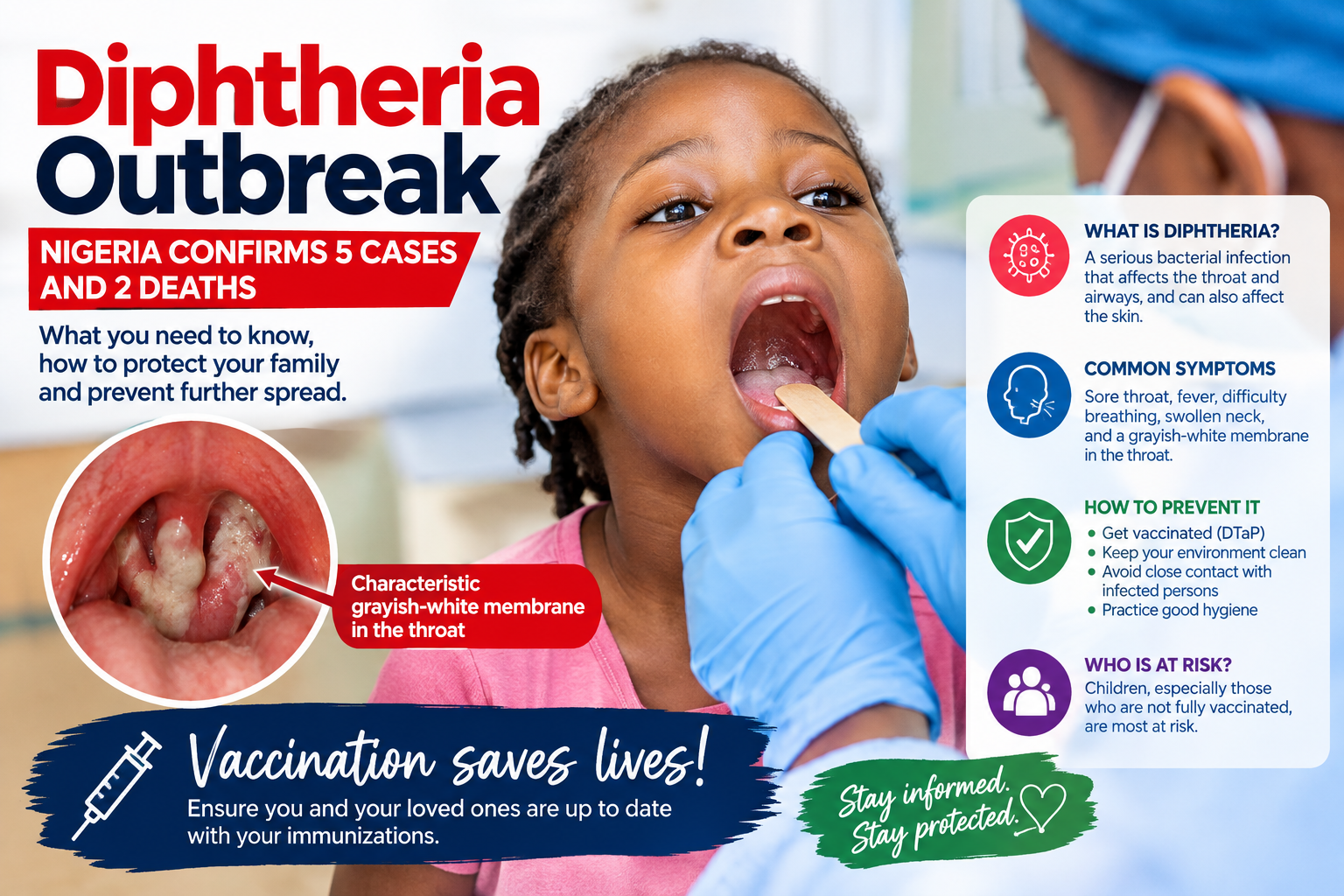
Diphtheria Outbreak: Abuja Confirms 5 Cases and 2 Deaths — What Nigerians Need to Know
A renewed diphtheria alert is raising concern in Nigeria after the Federal Capital Territory Administration (FCTA) confirmed five cases of diphtheria and two deaths in Abuja.
The cases were confirmed after 15 suspected cases were investigated. Authorities have since intensified surveillance and response measures, including contact tracing, preventive antibiotics and community sensitisation.
While five confirmed cases may sound small, the two recorded deaths are a serious reminder that diphtheria is a potentially life-threatening disease that should not be ignored.
What is diphtheria?
Diphtheria is a serious bacterial infection caused by toxin-producing strains of Corynebacterium diphtheriae. It commonly affects the nose and throat and can produce a thick membrane in the throat that makes breathing and swallowing difficult.
The bacteria can also release toxins that damage organs such as the heart and nervous system.
How does diphtheria spread?
Diphtheria can spread from an infected person through respiratory droplets produced when coughing or sneezing.
It may also spread through close contact with infected skin lesions or contaminated items such as clothing and towels.
This is why crowded environments and close household contact can increase the risk of transmission.
Symptoms Nigerians should watch out for
Early symptoms may look like an ordinary respiratory infection, which can make diphtheria difficult to recognise initially.
Watch out for:
Difficulty breathing, severe throat swelling or rapidly worsening symptoms should be treated as a medical emergency.
Do not wait for the illness to become severe before seeking medical attention.
Why are health authorities concerned?
Nigeria has continued to experience diphtheria outbreaks in recent years. NCDC surveillance has identified significant gaps in vaccination coverage, with children making up a large proportion of confirmed cases.
Recent national surveillance has also shown that several states contribute substantially to Nigeria’s confirmed diphtheria burden, while vaccination gaps remain an important concern.
The current situation in Abuja therefore deserves attention, particularly because early identification and treatment can save lives.
Vaccination remains the strongest protection
The good news is that diphtheria is vaccine-preventable.
The diphtheria-containing vaccines given through Nigeria’s routine childhood immunisation programme provide important protection against the disease.
Parents and caregivers should:
The CDC identifies staying up to date with recommended vaccination as the best protection against diphtheria.
What should you do if you suspect diphtheria?
If you or your child develops symptoms suggestive of diphtheria, seek medical attention immediately.
Do not rely on self-medication or wait several days to see whether the symptoms disappear.
People who have been in close contact with a confirmed case may also require medical evaluation, preventive antibiotics and vaccination depending on their immunisation status and the advice of health authorities.
Health workers may also need to report suspected cases promptly so that appropriate public health measures can be initiated.
The message for Nigerians
The confirmation of five cases and two deaths in Abuja should not create unnecessary panic but it should create awareness and action.
Diphtheria can be serious and fatal, but vaccination, early recognition, appropriate treatment and rapid public-health response can significantly reduce its impact.
Parents: check your children’s vaccination cards.
Adults: don’t ignore persistent or severe throat symptoms.
Communities: report suspected cases early and avoid spreading misinformation.
And most importantly, don’t wait until an outbreak reaches your neighbourhood before taking vaccination seriously.
Protect yourself. Protect your children. Protect your community.
Diphtheria is preventable and early action can save lives.


Comments