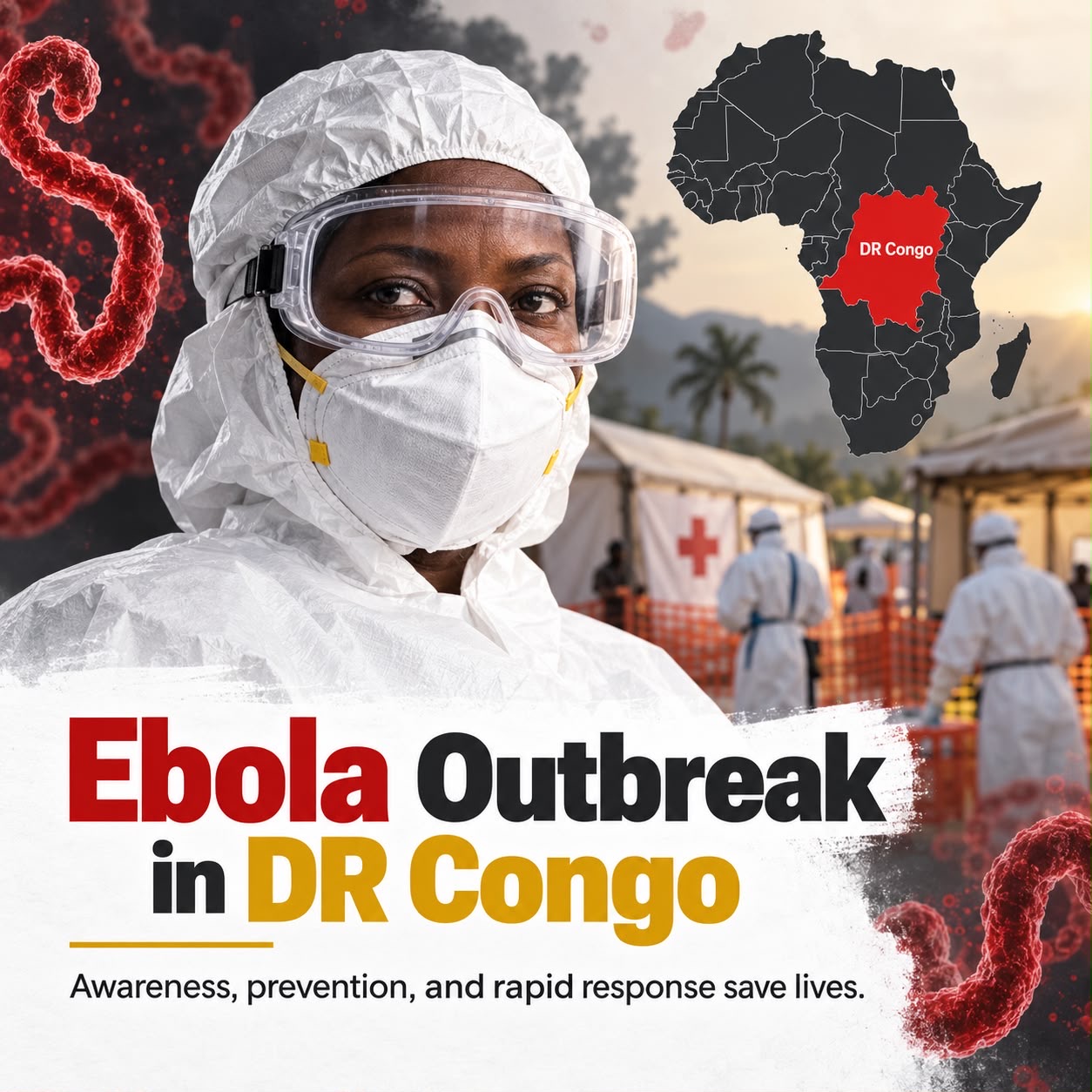
Ebola Outbreak in the Democratic Republic of Congo: What You Need to Know
The Democratic Republic of Congo (DRC) is facing a major Ebola outbreak caused by the Bundibugyo virus, a strain of Ebola virus that requires a strong public-health response. The outbreak began in Ituri Province in May 2026 and has since expanded geographically, making surveillance, early diagnosis and infection prevention especially important.
What is happening in the DRC?
According to the latest WHO figures available for 16 September 2026, the DRC had reported 7,475 confirmed cases and 3,605 confirmed deaths, with a confirmed-case fatality ratio of about 48%. WHO data also recorded 1,798 recoveries. These figures can change as investigations and reporting continue.
The outbreak has expanded from its original epicentre in Ituri to seven provinces and 62 health zones. Sud-Ubangi became the seventh affected province after a confirmed case was detected in Bulu Health Zone.
While there are encouraging signs in some areas, WHO officials have stressed that the outbreak is not yet over. Transmission has decreased in parts of Ituri, but cases continue to rise in areas of North Kivu, where insecurity and population movement make outbreak control more difficult.
What is Bundibugyo virus?
Bundibugyo virus is one of the viruses that can cause Ebola disease. Ebola is a severe viral illness that can cause fever, weakness, vomiting, diarrhoea, abdominal pain and, in severe cases, bleeding and organ failure.
The virus can spread through direct contact with the blood or other body fluids of an infected person, including during caregiving or contact with the body of someone who has died from the disease.
Healthcare workers are particularly vulnerable when appropriate infection-prevention and control measures are not followed.
Why is this outbreak particularly concerning?
Several factors are making the response difficult:
WHO assessed the risk within the DRC as very high and the risk to countries sharing land borders with the DRC as high, while assessing the risk to the wider African region and globally as low based on available information.
Is there an Ebola vaccine?
An important point is that this outbreak is caused by Bundibugyo virus, not the Zaire ebolavirus for which the licensed Ervebo vaccine was developed.
WHO says available evidence is currently insufficient to establish that Ervebo protects people against Bundibugyo virus. WHO therefore recommends that Ervebo be used for Bundibugyo virus disease within research protocols, rather than as routine programmatic vaccination. Vaccination of healthcare and frontline workers is taking place in the context of research.
Researchers are also studying treatments and vaccines specifically relevant to Bundibugyo virus.
How can people protect themselves?
People living in or travelling from affected areas should follow instructions from public-health authorities and healthcare workers.
Important measures include:
Early recognition, laboratory testing, supportive treatment and effective infection prevention can improve outcomes and reduce further transmission.
What does this mean for neighbouring countries?
Because the DRC shares borders with several countries and people frequently cross borders for work, trade and other reasons, continued regional surveillance is important.
WHO has maintained border surveillance and recommends strengthened cross-border coordination. However, WHO currently advises against general travel or trade restrictions based on the available evidence.
The situation remains closely monitored
There are signs that response efforts are beginning to reduce transmission in some parts of the DRC. Nevertheless, health authorities continue to emphasize vigilance because Ebola outbreaks can change rapidly.
The priority remains finding cases early, monitoring contacts, providing appropriate care, protecting healthcare workers and communities, and preventing further geographic spread.
For countries in Africa, including Nigeria, the outbreak is also a reminder of the importance of strong disease surveillance, laboratory capacity, infection prevention and rapid-response systems.
Public-health message: Ebola is serious, but informed communities, early reporting and effective infection-prevention measures can save lives and limit transmission.


Comments