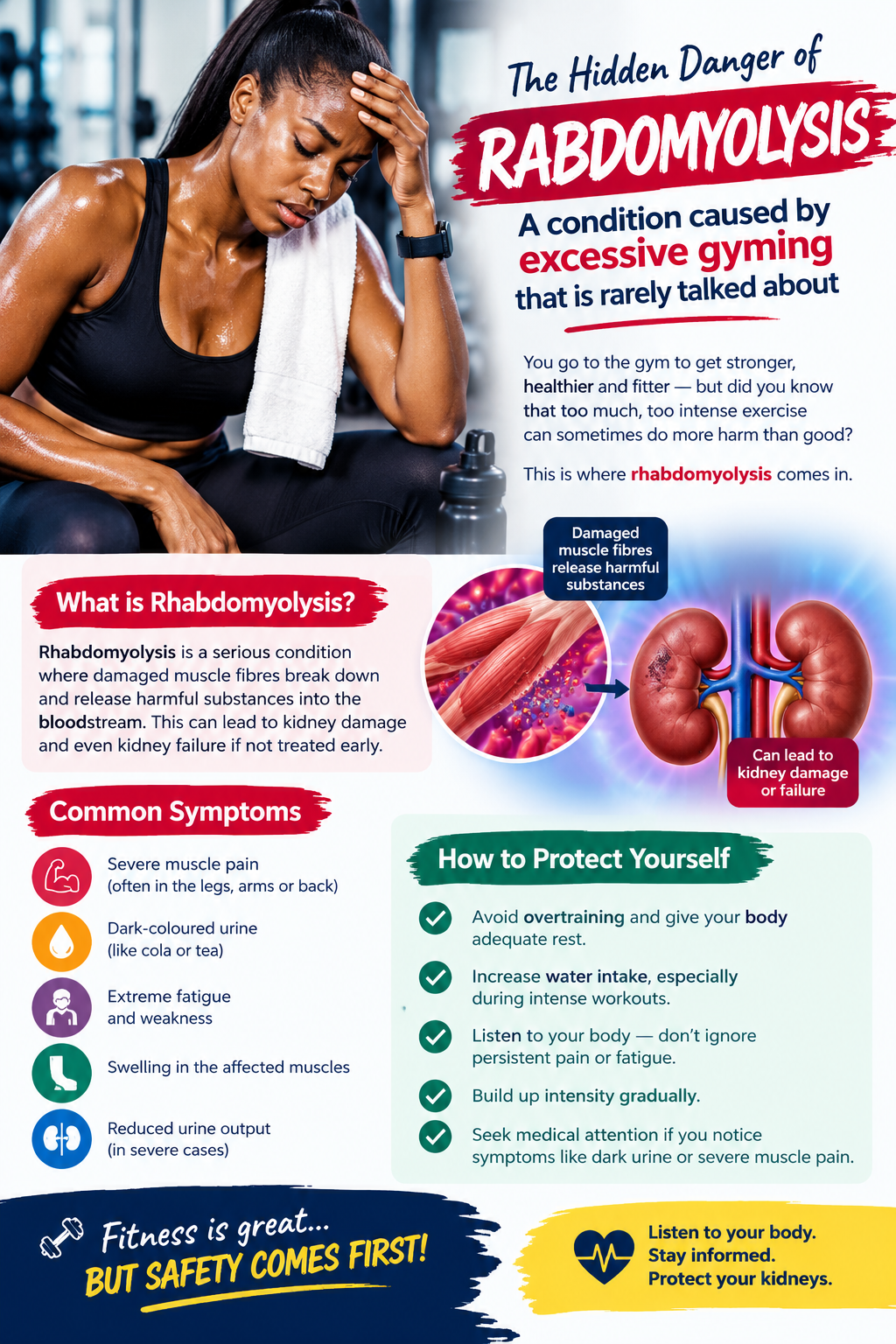
Rhabdomyolysis: The Rarely Talked-About Gym Condition That Can Damage Your Kidneys
You went to the gym to build your body. But could pushing yourself too hard actually put your kidneys at risk?
Most people know that excessive exercise can cause muscle soreness and fatigue. Far fewer people know about rhabdomyolysis (rhabdo) a potentially serious medical condition that can occur when muscles become severely damaged.
In some cases, rhabdomyolysis can cause acute kidney injury (AKI) and, when severe, can lead to kidney failure.
This doesn’t mean that going to the gym is dangerous. Exercise has enormous health benefits. The concern is extreme or unaccustomed physical exertion, particularly when the body is pushed beyond what it can safely tolerate.
What Is Rhabdomyolysis?
Rhabdomyolysis occurs when skeletal muscle tissue breaks down rapidly and releases substances from inside muscle cells into the bloodstream.
One of these substances is myoglobin.
When large amounts of myoglobin enter the bloodstream, they can place significant stress on the kidneys. Severe cases can result in acute kidney injury, abnormal electrolyte levels and other potentially life-threatening complications.
How Can Intense Gym Workouts Trigger It?
Rhabdomyolysis can happen after several types of severe physical exertion, including extremely intense or prolonged workouts.
Examples include:
The risk can be particularly concerning when someone suddenly increases the intensity, duration or frequency of their workouts.
How Can Rhabdomyolysis Cause Kidney Failure?
This is the part that many gym-goers don’t know.
When muscles are severely damaged, myoglobin is released into the blood. In large amounts, myoglobin can contribute to kidney damage.
Severe muscle breakdown can also cause dangerous changes in substances such as potassium, which can affect the heart.
As the kidneys become injured, their ability to filter waste and maintain the body’s fluid and electrolyte balance can deteriorate.
In severe cases, this can progress to acute kidney failure, sometimes requiring dialysis.
The Warning Signs You Should Know
After an extremely intense workout, don’t automatically assume that severe symptoms are simply signs that you “worked hard.”
Possible symptoms of rhabdomyolysis include:
Severe muscle pain
The pain may be unusually intense or disproportionate to what you would normally expect after exercise.
Muscle swelling
The affected muscles may become swollen, tender or unusually firm.
Muscle weakness
You may have difficulty moving or using the muscles that were heavily exercised.
Dark or cola-coloured urine
This can occur when myoglobin is released from damaged muscles.
Reduced urine output
Producing significantly less urine can indicate kidney involvement and requires urgent medical attention.
Extreme weakness or feeling unwell
Some people may also experience fatigue, nausea or other generalized symptoms.
Importantly, a person can have rhabdomyolysis without having every classic symptom.
Rhabdo vs Normal Muscle Soreness
It is normal to experience muscle soreness after exercising, particularly after starting a new workout.
But rhabdomyolysis is not simply ordinary post-workout soreness.
Severe pain, significant swelling, marked weakness, dark urine or reduced urination after intense exercise should not be ignored.
Trying to “push through” severe symptoms can be dangerous.
How Is Rhabdomyolysis Diagnosed?
If a healthcare professional suspects rhabdomyolysis, blood and urine tests may be performed.
One important blood test measures creatine kinase (CK). CK levels can become extremely elevated when skeletal muscle is severely damaged.
Doctors may also monitor:
Early recognition is important because treatment can reduce the risk of serious complications.
Treatment
Treatment depends on the severity and cause.
Patients with significant rhabdomyolysis may require intravenous fluids and close monitoring of kidney function and electrolytes. Severe kidney injury may require temporary dialysis.
Treatment also involves identifying and addressing the cause of the muscle breakdown.
How Can You Reduce Your Risk?
You don’t need to stop exercising.
Instead, exercise intelligently:
Increase workout intensity gradually.
Give your muscles adequate recovery time.
Stay appropriately hydrated, especially when exercising in hot conditions.
Avoid suddenly attempting extremely demanding workouts after a long period of inactivity.
Pay attention to unusual or severe pain.
Don’t compete with someone else’s fitness level.
Seek medical care when severe symptoms develop after strenuous exercise.
Don’t Let “No Pain, No Gain” Put You at Risk
There is a difference between challenging your muscles and pushing your body beyond its limits.
Rhabdomyolysis is uncommon, but it is serious enough to know about. In severe cases, the muscle breakdown can damage the kidneys and result in acute kidney failure.
Severe muscle pain + swelling + weakness + dark/cola-coloured urine or reduced urination after intense exercise = don’t ignore it.
Seek urgent medical attention.
Your fitness journey should make you stronger and healthier—not put your kidneys at risk.
Exercise smart. Know your limits. And never ignore warning signs from your body.


Comments