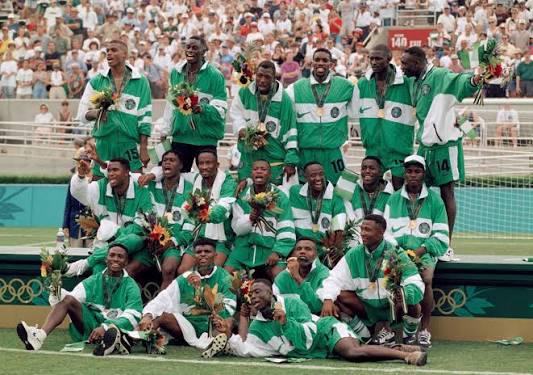
For generations, the Super Eagles of Nigeria have been more than just a football team. They have been a source of national pride, a symbol of African footballing talent and, at their best, one of the most exciting teams to watch on the continent.
But in recent years, Nigerian football has been asking a difficult question: Can the Super Eagles get back to their glory days?
The answer is yes — but only if Nigeria is willing to rebuild the foundations of its football.
Remembering the Glory Years
There was a time when the name Nigeria struck fear into opponents.
The Super Eagles won the Africa Cup of Nations (AFCON) in 1980, 1994 and 2013, establishing themselves as one of Africa’s traditional football powers.
The 1990s were particularly special. Nigeria qualified for the FIFA World Cup for the first time in 1994 and immediately made an impression, reaching the Round of 16. Four years later, the Eagles again reached the knockout stage at the 1998 World Cup.
Then came the unforgettable 1996 Olympic triumph in Atlanta, when Nigeria defeated Brazil in the semifinal before overcoming Argentina in the final to win gold. Players such as Nwankwo Kanu, Jay-Jay Okocha and Emmanuel Amuneke became national heroes, while the victory demonstrated that African football could compete with the world’s best.
Those teams had something today’s Super Eagles desperately need: a strong identity, togetherness and belief.
The Talent Is Still There
Nigeria’s current problem is not a shortage of football talent.
The country continues to produce players capable of performing at the highest level of European football. Victor Osimhen has established himself as an elite striker, while Ademola Lookman has emerged as another major attacking threat. CAF highlighted both players as key figures for Nigeria, with Lookman and Osimhen central to the team’s attacking ambitions.
So why hasn’t that individual quality consistently translated into trophies?
Because football is not won by talent alone.
A national team needs a clear tactical system, excellent preparation, strong leadership, competent administration and players who understand their roles. Nigeria has often had the individual brilliance without consistently having all the other pieces in place.
The Biggest Problem: Consistency
Perhaps the greatest enemy of Nigerian football has been inconsistency.
Coaches come and go. Players change. Football administrators change. Plans are announced and then abandoned. Long-term development can easily be replaced by short-term reactions to disappointing results.
The consequences have become increasingly serious.
Nigeria failed to qualify for the 2026 FIFA World Cup, losing to the Democratic Republic of Congo on penalties. On August 27, 2026, Nigeria Football Federation president Ibrahim Gusau and general secretary Mohammed Sanusi resigned amid mounting criticism of the country’s football administration.
Missing a World Cup is not simply disappointing for a country with Nigeria’s football tradition. It is a warning sign that something deeper needs to change.
What Needs to Change?
If Nigeria wants another golden generation, the country must stop relying on hope and start building a sustainable football structure.
1. Develop Young Players Properly
Nigeria has enormous football talent, but discovering talented youngsters is only the beginning.
There needs to be better investment in academies, youth competitions, coaching education, pitches and sports science. Young players should be taught not only how to dribble and score, but also tactical intelligence, discipline and professionalism.
2. Build a Clear Football Philosophy
The Super Eagles should have an identity.
Are they going to press aggressively? Control possession? Play fast counter-attacking football?
The exact answer can change with the coach, but the country needs a coherent philosophy that runs through its youth teams and senior national team.
3. Give Coaches Time
Constantly changing coaches makes it difficult to build a team.
A good coach needs time to understand the players, establish a system and develop young talent. Changing direction every time Nigeria loses an important match may provide temporary relief, but it rarely creates long-term success.
4. Improve Football Administration
This may be the most important issue of all.
The football federation needs stability, transparency and competent leadership. Players and coaches cannot be expected to deliver consistently when the structures supporting them are unstable.
The recent NFF resignations show just how serious the situation has become.
5. Create a Stronger Connection Between Youth and Senior Football
Nigeria should not have to start from scratch every few years.
The U-17, U-20, Olympic and senior teams should operate as parts of one development pathway. Young players who demonstrate potential should have a clear route toward the Super Eagles.
That is how a country creates generations rather than individual stars.
There Is Still Reason for Hope
Despite the setbacks, writing off the Super Eagles would be a mistake.
Nigeria remains a country with an extraordinary football culture. Millions of Nigerians follow football passionately, and Nigerian players continue to emerge across Europe and other major leagues.
The history also proves that Nigerian football can recover.
After years without an AFCON title, the Super Eagles rebuilt and won the tournament again in 2013. They then reached the AFCON final in 2023, showing that the team was still capable of competing for major honours. Nigeria’s football record includes three AFCON titles and five runner-up finishes.
The ingredients for another great team are therefore still present.
What Nigeria needs is the structure to bring those ingredients together.
The Super Eagles Can Rise Again
The glory days will not return simply because Nigeria has talented footballers.
They will return when talent meets good coaching, proper development, strong administration, tactical discipline and national commitment.
The Super Eagles do not need to recreate the 1994 team. They need to create a new generation with its own identity.
Nigeria’s football history is too rich to be defined by recent disappointments.
The question, therefore, should not be whether the Super Eagles can return to glory.
They can.
The real question is whether Nigerian football is prepared to make the difficult changes required to get there.
If the answer is yes, the green and white could once again become a symbol of fear, excitement and pride across Africa and beyond.
The Eagles can fly again — but this time, they need a stronger foundation beneath their wings.


Comments