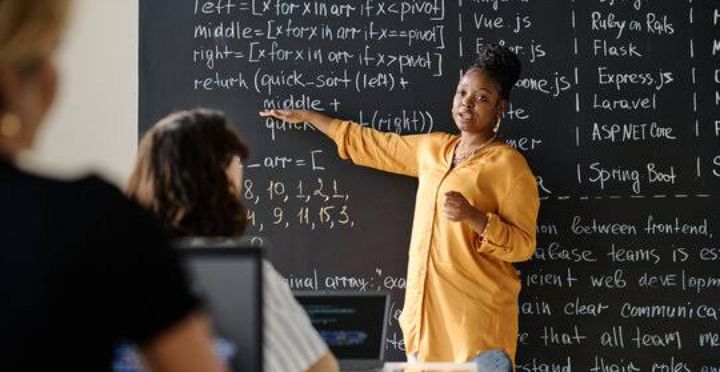
How did a profession responsible for producing doctors, lawyers, engineers, and leaders become one that many parents are reluctant to recommend to their own children?
There was a time when becoming a teacher was a source of pride. Teachers were respected members of society, admired for their knowledge, discipline, and commitment to shaping the future.
They were seen not merely as employees but as nation builders, mentors, and custodians of knowledge.
Parents encouraged their children to learn from teachers, and communities looked up to them as people whose words and actions could influence generations.
Today, however, a disturbing question confronts us: Why do so many parents no longer want their children to become teachers?
Why would a parent celebrate the news that their child has gained admission to study medicine, law, engineering, or computer science but feel disappointed when that same child chooses education?
Why is teaching increasingly perceived by some families as a profession to escape rather than one to embrace?
The answer lies not necessarily in the nature of teaching itself but in how society treats those who practise it.
One of the greatest ironies in society is that almost every successful professional has passed through the hands of a teacher, yet teachers are often among the least appreciated professionals.
The doctor who saves lives was taught by a teacher. The lawyer who argues cases in court was taught by a teacher. The engineer who constructs bridges, the entrepreneur who builds businesses, and the leader who governs a nation all benefited from the guidance of teachers. Even the people who criticise teachers were once taught by them.
Yet, despite their enormous contribution to human development, teachers frequently struggle to receive the financial rewards, social recognition, and professional respect that reflect the importance of their work.
This raises a fundamental question: If teaching is so essential to the development of every other profession, why is the teacher's own profession often treated as less valuable?
The problem is not that teaching lacks importance. The problem is that society has failed to translate that importance into adequate rewards and recognition.
One major reason many parents discourage their children from becoming teachers is the financial reality of the profession.
In many places, teachers face salaries that do not adequately reflect their responsibilities, qualifications, workload, and cost of living.
Some struggle to meet basic needs, support their families, pay their children's school fees, or save towards a comfortable retirement.
For teachers in such circumstances, survival can become a daily concern.
The situation becomes even more painful when teachers compare their earnings with those of professionals whose work depends on the educational foundation they helped to build.
Although salary structures vary across countries, institutions, and levels of education, the concern remains familiar: teaching is often expected to be driven by passion, even when the financial conditions make it difficult to sustain that passion.
Of course, teaching requires dedication. It demands patience, commitment, and a genuine interest in the growth of others. But passion should not be used as an excuse to underpay professionals.
A teacher's love for the classroom should never become society's justification for keeping that teacher financially disadvantaged.
Teachers have families to feed, bills to pay, dreams to pursue, and futures to secure, just like everyone else.
They should not have to choose between serving society and achieving financial stability.
Another challenge is the way some people perceive the teaching profession.
In certain communities, becoming a teacher is viewed as a second-choice career, especially when compared with professions believed to offer greater financial security, prestige, or opportunities for advancement.
A young person may express a desire to become a teacher only to be asked, "Is that the best you can do?"
Some parents may discourage their children from studying education because they fear that the profession will limit their financial prospects or social mobility.
In other cases, a young graduate may be advised to pursue another career, even after demonstrating a genuine interest in teaching.
Such attitudes send a damaging message to young people: that teaching is respectable enough for society to depend on but not desirable enough for them to pursue.This contradiction is dangerous.
When a society consistently presents teaching as an inferior career choice, it should not be surprised when fewer young people aspire to become teachers.
The issue is not that every child must become a teacher. Every individual deserves the freedom to pursue a career that matches their interests, abilities, and ambitions.
Rather, the concern is that young people should not be discouraged from teaching simply because society has failed to make the profession attractive.
Teaching should be a career people can choose with pride, not one they must defend with embarrassment.
Teaching is far more demanding than many people realise.
A teacher does not merely stand before a class and deliver lessons. Teachers plan instruction, assess assignments, prepare examinations, maintain records, manage classrooms, identify learning difficulties, communicate with parents, and support students' emotional and social development.
They work with learners who have different abilities, personalities, backgrounds, and needs. They are expected to maintain discipline, produce good academic results, and prepare students for a rapidly changing world.
In many schools, teachers also contend with overcrowded classrooms, inadequate teaching materials, poor infrastructure, limited technological resources, and administrative demands that consume valuable time.
Despite these challenges, teachers are often judged primarily by the performance of their students.
When students perform poorly, teachers may be blamed without sufficient consideration of the learning environment, available resources, parental involvement, or wider social conditions.
When students succeed, however, the recognition may go to the students themselves or the institutions they attend, while the teacher's contribution receives little attention.This imbalance can be discouraging.
Teachers need accountability, just as professionals in other fields do.
However, accountability must be accompanied by the resources, support, and professional respect necessary to perform effectively.
It is unreasonable to demand excellent results from teachers while neglecting the conditions under which they work.
Society often expects teachers to perform miracles.
Parents expect their children to become disciplined, intelligent, responsible, and successful. Schools expect teachers to produce excellent results.
Governments expect improvements in educational standards.
Communities expect teachers to serve as moral examples.
These expectations are not inherently wrong. Teachers play an important role in children's development.
The problem arises when society places these enormous responsibilities on teachers without providing adequate support.
Education is a shared responsibility. Parents must raise and guide their children, schools must provide supportive learning environments, governments must establish effective educational policies, and communities must value learning.
Teachers cannot single-handedly compensate for every failure within the educational system.
A child who struggles academically may need additional support at home.
A school with insufficient learning materials requires institutional intervention.
A teacher managing an overcrowded classroom needs practical assistance, not merely criticism.
When society places every educational burden on teachers while refusing to share responsibility for the outcome, it creates an environment in which the profession becomes increasingly difficult to sustain.
Is it surprising, then, that some parents hesitate to encourage their children to enter such a profession?
Perhaps the most worrying consequence of undervaluing teachers is the effect it may have on the future of education.
When talented young people are discouraged from entering the profession, education systems risk losing potential educators who could have inspired, mentored, and transformed the lives of countless learners.
Where teaching positions become difficult to fill, schools may struggle to recruit and retain qualified staff.
Where experienced teachers leave because of poor working conditions or limited career prospects, institutions risk losing valuable knowledge and experience.
These outcomes are not inevitable, and they vary from one educational system to another.
Nevertheless, they illustrate a serious concern: a society that neglects the welfare of teachers may eventually weaken the very system on which its future depends.
We must also recognise that not everyone who studies education will become an excellent teacher, just as not everyone who enters another profession will excel in it.
Effective teaching requires knowledge, communication skills, empathy, preparation, and continuous professional development.
The goal, therefore, should not simply be to increase the number of people entering teaching. It should be to attract capable, committed individuals and give them the conditions necessary to succeed.
The question is not merely who will teach our children tomorrow, but whether we are creating a society in which talented people will want to teach them.
In Nigeria, discussions about the teaching profession often touch on remuneration, working conditions, recruitment, professional development, and the public perception of teachers.
For many families, choosing a career is not just about personal passion. It is also about economic survival, social mobility, and the ability to build a stable future.
Parents want their children to enjoy opportunities that may have been unavailable to previous generations.
They want them to earn decent incomes, support their families, and live with dignity.
When teaching is perceived as offering fewer opportunities to achieve these goals, some parents naturally become hesitant to recommend it.
This does not mean that teaching has no opportunities or that all teachers in Nigeria are poorly paid.
Conditions differ between federal, state, and private institutions, as well as between locations, qualifications, and levels of responsibility.
Nevertheless, the wider concern deserves serious attention: if the people responsible for educating future professionals struggle to enjoy the security and recognition associated with their work, society must examine whether its priorities are properly aligned.
Educational development requires more than impressive school buildings, revised curricula, modern technology, and ambitious policy statements.
It requires teachers who are adequately prepared, properly supported, fairly compensated, and respected as professionals.
No educational reform can achieve its full potential if the people expected to implement it are treated as an afterthought.
If society genuinely wants to restore the dignity of teaching, public appreciation alone will not be enough. Meaningful improvements must accompany encouraging words.
Teachers should be paid in a manner that reflects their qualifications, responsibilities, workload, and contribution to society.
Fair remuneration can help teachers meet their needs, plan for their futures, and focus more effectively on their professional responsibilities.
It is also important that salaries are paid promptly and that applicable allowances, benefits, and pension entitlements are honoured.
A profession cannot remain attractive when its practitioners are constantly worried about financial survival.
Schools need adequate classrooms, teaching materials, functional facilities, and appropriate technological resources.
Class sizes should be managed as effectively as available resources permit, and teachers should have reasonable access to professional support.
Administrative demands should also be reviewed so that teachers can devote sufficient time to lesson preparation, classroom instruction, and individual student needs.
Improving working conditions is not a favour to teachers. It is an investment in the quality of education.
Parents, students, employers, policymakers, and community leaders all have roles to play in restoring the dignity of teaching.
We must stop presenting teaching as a career suitable only for people who cannot find anything better to do.
Instead, we should recognise the knowledge, preparation, patience, and professional competence required to educate others.
Respect should not be reserved for teachers during ceremonial occasions or public celebrations. It should be reflected in everyday interactions, institutional decisions, and the way teachers are treated.
Governments and school owners must recognise that teachers are central to the success of their institutions.
This responsibility includes providing appropriate working conditions, ensuring fair employment practices, supporting professional development, and establishing systems through which teachers can raise legitimate concerns.
Educational policies should be designed with meaningful input from teachers, who understand many of the practical challenges involved in classroom instruction.
Teachers should not simply be expected to implement decisions made about them. Their professional experiences should help shape those decisions.
Parents are important partners in education.
They should encourage their children to respect teachers, take learning seriously, and understand that academic success requires cooperation between home and school.
When disagreements arise, parents should seek constructive solutions rather than automatically treating teachers as adversaries.
At the same time, teachers must remain accountable for their conduct and professional responsibilities.
Respect for teachers does not mean excusing misconduct; it means addressing concerns fairly and recognising the essential work they perform.
A healthy relationship between parents and teachers creates a better environment for children to learn and grow.
Despite its challenges, teaching remains one of the professions with the greatest potential to influence society.
A good teacher can help a struggling child discover a talent, encourage a discouraged student to persevere, and inspire a young person to pursue a dream that once seemed impossible.
The effects of good teaching may not always be immediate or easily measured.
Sometimes, the significance of a teacher's work becomes clear years later, when a former student applies a lesson, remembers a word of encouragement, or makes a decision shaped by what they learned in the classroom.
These contributions are invaluable.
However, recognising the importance of teaching should not mean romanticising the sacrifices teachers make.
Teachers should not be expected to accept hardship simply because their work is meaningful. They should not have to choose between professional fulfilment and financial security.
Other professionals can serve society while earning decent incomes, enjoying career advancement, and securing their futures. Teachers should have the same opportunity.
The dignity of teaching does not depend on poverty, and dedication should not require self-neglect.
Parents have every right to want a bright future for their children. They want them to enjoy opportunities, achieve their ambitions, and live comfortably.
There is nothing wrong with encouraging children to explore different careers or consider the financial implications of their choices.
However, parents should be careful not to discourage a child who genuinely wishes to become a teacher simply because of the profession's social image.
A child who possesses a passion for education, the ability to communicate, patience, curiosity, and a desire to help others should be allowed to explore that ambition seriously.
At the same time, young people should enter the profession with their eyes open, understanding both its rewards and its challenges.
The responsibility also rests on society to ensure that their decision is not unnecessarily punished by poor working conditions, inadequate compensation, or a lack of professional respect.
We should aspire to build a future in which a young person can proudly tell their parents, "I want to become a teacher," and receive encouragement rather than disappointment.
Such a future will require more than inspirational speeches. It will require visible improvements in the realities of the profession.
The question of why many parents no longer want their children to become teachers should trouble every society that claims to value education.
It is a question about salaries, working conditions, professional respect, career opportunities, and the gap between what society says about teachers and how it treats them.
Teachers are praised for shaping the future, yet the profession may be denied the practical support required to attract and retain talented people.
They are told that their work is noble, yet nobility does not pay the bills. They are reminded that they are nation builders, yet their contributions may go unrecognised in the decisions that shape their working lives.This contradiction must end.
We cannot continually demand excellence from teachers while ignoring their welfare.
We cannot claim to prioritise education while treating educators as though they are easily replaceable. And we cannot expect the next generation to embrace teaching if we continue to portray it as a profession with more sacrifices than opportunities.
If we want better schools, we must value teachers. If we want better teachers, we must make teaching a profession worth choosing.
And if we want a brighter future for our children, we must stop asking teachers to build that future while neglecting their own.
Perhaps the real question is not why parents no longer want their children to become teachers.
Perhaps the real question is this: What kind of society are we building when the people we trust to prepare our children for the future are the very people we hesitate to encourage our children to become?
Until we confront that question honestly, the teaching profession will continue to face a challenge far greater than low public esteem: the risk of losing the very people society needs to educate its future.
Nneka Charles.


Comments