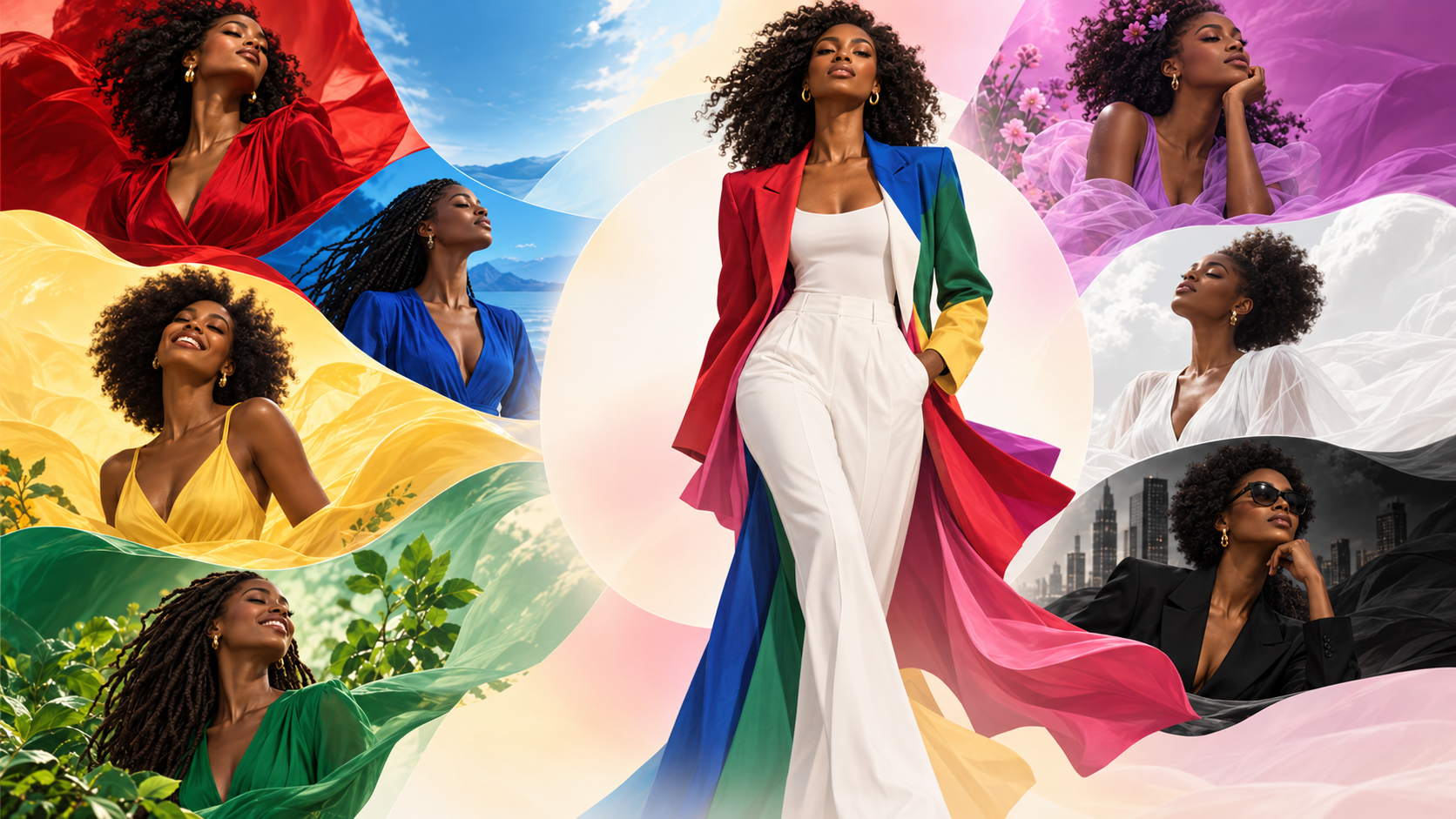
Have you ever opened your wardrobe and instinctively reached for a particular colour without knowing why? Maybe you feel more confident in black, happier in bright colours, calmer in soft neutrals, or more powerful when wearing red. Your choice of clothing colours is not always random.
Colours communicate messages, influence emotions, and can shape how you feel about yourself and how others perceive you. Before you say a single word, the colours you wear are already telling a story. This is the psychology behind the colours you wear.
For centuries, humans have attached meanings and emotions to colours. While personal experiences, culture, and trends influence how we interpret colours, research in psychology and consumer behaviour shows that colours can affect mood, attention, and perception.
The colour of your outfit can influence: How confident you feel. How approachable you appear. How people interpret your personality. The emotional energy you bring into a space.
Fashion is not only about looking good; it is also a form of communication.
Black: Power, mystery, and confidence.
Black has long been associated with sophistication, authority, and elegance. It is a colour often chosen by people who want to appear polished, serious, or in control.
A black outfit can create a sense of: Confidence, independence, professionalism, and mystery. This is why black appears frequently in business wear, luxury fashion, and evening styles.
However, black can also communicate distance or seriousness depending on the style and setting. A black suit creates a different impression from a casual black hoodie.
Black does not simply say “I want attention.” Sometimes it says, “I know who I am.”
Red: Passion, energy, and boldness.
Red is one of the most emotionally powerful colours. It is often linked with passion, excitement, confidence, and energy.
People who wear red may appear: Bold, expressive, charismatic, and confident.
A red dress, lipstick, or accessory can become a statement because the colour naturally attracts attention.
Red is often chosen when someone wants to feel powerful or make an impression. It represents courage and the willingness to be noticed.
White: Simplicity, freshness, and new beginnings.
White is commonly associated with purity, cleanliness, and simplicity.
People who wear white often create an impression of being: calm, organised, elegant, and fresh.
Minimalist fashion often uses white because it creates a sense of space and sophistication.
However, keeping white clothing clean and intentional also communicates discipline and attention to detail.
Blue: Trust, calmness, and stability.
Blue is one of the most universally liked colours. It is often connected with feelings of trust, security, and calmness.
This is why many companies use blue in their branding. It creates feelings of reliability and professionalism.
In fashion, blue can communicate: Confidence without aggression, intelligence, dependability, and calmness.
A navy blue suit, for example, often feels professional while remaining approachable.
Green: Balance, growth, and connection with nature.
Green is strongly associated with nature, renewal, and harmony.
People drawn to green may be expressing a desire for: balance, peace, growth, and fresh energy.
Different shades create different impressions. A deep emerald green can feel luxurious, while a soft sage green can feel calm and natural.
Yellow: Happiness, creativity, and optimism.
Yellow is bright, energetic, and attention-grabbing. It is often connected with happiness, creativity, and positivity.
Wearing yellow can communicate: Confidence, playfulness, creativity, and warmth.
Yellow is visually strong, many people use it as an accent colour rather than wearing it from head to toe.
A yellow handbag, shoe, or top can instantly lift an outfit.
Pink: Softness, romance, and self-Expression.
Pink has evolved beyond traditional stereotypes. Today, it represents a wide range of emotions, from softness and romance to confidence and bold self-expression.
Different shades create different feelings. Soft pink: gentle, feminine, peaceful. Hot pink: energetic, fearless, expressive. Dusty pink: mature, elegant, refined.
Pink can be both delicate and powerful.
Brown and Beige: Warmth and reliability.
Earth tones such as brown, beige, and camel often create feelings of comfort and stability.
These colours communicate: Practicality, warmth, simplicity, and natural elegance.
They are popular in minimalist and luxury fashion because they create a timeless appearance.
Purple: Creativity and luxury.
Purple has historically been associated with royalty because of how rare and expensive purple dyes once were.
Today, purple often represents: Creativity, imagination,individuality, and luxury.
People who wear purple may enjoy standing out while maintaining elegance.
Your favourite clothing colour can sometimes reflect your personality, your mood, or even the version of yourself you want to express.
For example: Someone wearing neutral colours every day may prefer simplicity and timelessness.
Someone constantly choosing bright colours may enjoy expression and visibility.
Someone wearing darker shades may appreciate elegance, privacy, or sophistication.
However, colours do not define a person completely. A person who wears black is not automatically serious, and someone who wears bright colours is not always outgoing. Fashion choices are influenced by many factors, including culture, environment, mood, and personal style.
Understanding colour psychology does not mean you must follow strict rules about what colours to wear. Instead, it allows you to become more intentional with your wardrobe.
Ask yourself:How do I want to feel today? Do you want to feel: Powerful? Try deeper tones like black, navy, or red. Calm? Consider blue, green, or soft neutrals. Creative? Explore purple, yellow, or bold combinations. Elegant? Choose timeless colours like white, beige, black, or champagne.
Your clothes are not just fabric. They are an extension of your identity.
The colours you wear can influence your mood, shape first impressions, and help you express parts of yourself that words cannot always explain.
Fashion is a language, and colour is one of its strongest forms of communication.
The next time you choose an outfit, do not only ask, “Does this look good?” Also ask: “What message does this colour help me tell?” Because sometimes, the colour you wear is the first sentence of your story.
Nneka Charles.


Comments